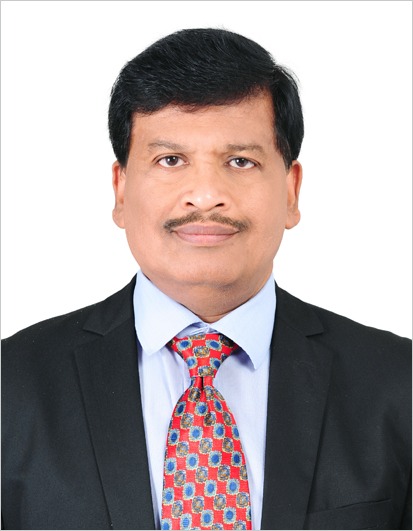
Brief profile of Bishnu Charan Parida
Mr. Bishnu Charan Parida is a distinguished development management professional with more than three decades of experience in rural development, women’s empowerment, and natural resource management in India. Since 2013, he has been serving as Chief Operating Officer of the Jharkhand State Livelihood Promotion Society (JSLPS), Department of Rural Development, Government of Jharkhand, where he leads the implementation of the Deendayal Antyodaya Yojana–National Rural Livelihoods Mission (DAY-NRLM) in the State. He facilitated the mission to mobilize more than 35 lakh rural poor households into over 3.21 lakh women’s self-help groups (SHGs), enabling nearly 25 lakh families to pursue diversified livelihoods across agriculture, allied sectors, microenterprises, and skills development. His work combines strategic vision with operational rigor, consistently delivering sustainable development outcomes at scale.
His career spans leadership roles across government, multilateral agencies, and civil society, including positions with JSLPS, UNDP India, SSUPSW, and PRADAN. In these roles, he has managed large-scale initiatives supported by institutions such as the World Bank, UNDP, UNICEF, DFID, WFP, and NABARD.
Academically, Mr. Parida holds a Master of Social Work (MSW) from Visva-Bharati University, Santiniketan, and an M.Phil. in Natural Resource Management from the Indian Institute of Forest Management (IIFM), Bhopal, where he was a Gold Medalist. He has also completed the Senior Leadership Programme at the Indian Institute of Management (IIM) Kozhikode. He is currently pursuing a PhD in Management at ICFAI University Jharkhand, Ranchi, with a research focus on emotional intelligence and workplace adaptability.
He is a member of the Board of Studies at Xavier Institute of Social Service (XISS), Ranchi, and Ramakrishna Mission Vivekananda Educational and Research Institute (RKMVERI), Ranchi. He also delivers sessions on the development sector and management to students at various academic institutions, in both in-person and online formats.
An active contributor to academic and public discourse, he writes regularly on environment, development, management, and motivational themes. He has presented his work at international forums in the United States, Thailand, and Bangladesh, and is the author of the book The Buddha for All.

